

The holiday season is one of the most anticipated periods for business owners. The shopping rush, the spirit of generosity, and shoppers’ fear of missing out all help boost sales and revenue just before the end of the year.
Because of this, many businesses invest heavily in marketing and promotional efforts to capture the attention of generous holiday shoppers.
However, everything comes to an end, and as with any other year, the next challenge is how to survive, or even thrive, during the post-holiday slump.
So, as we approach 2026 and welcome January, let’s explore some post-holiday sales strategies to maintain the momentum.
Read on to know more.
Why January Sales Feels Like a Sales Black Hole
While every new year brings new opportunities, it can be challenging for business owners coming off the highs of the holiday season.
In fact, for many businesses, January becomes a sobering wake-up call after the adrenaline rush of Christmas and Boxing Day.
The Holiday Hangover Effect
The psychological shift from December 31 to January 1 can be jarring.
Customers are no longer excited to shop until they drop. The majority are no longer interested in gift bundles and other promotional stunts that worked so well during the holidays.
Reduced Consumer Spending Power in January
After months of making spending decisions on gifts, travel, and events, customers often enter a state of “spending paralysis” by January. By then, the need for new purchases is far less appealing, especially as many people adopt “No-Spend Challenges” during this month.
It also doesn’t help that much of the festive season is fueled by credit.
When the holiday cheer fades and statements arrive in mid-January, reality sets in for many households. As a result, they often shift into a “repayment-only” mode, cutting back on dining out and “unnecessary” purchases.
 Why Q1 Sets the Tone for the Year
 Why Q1 Sets the Tone for the Year
 Customers’ fear of spending at the start of the year can be particularly challenging for small and medium-sized businesses (SMBs). For many, boosting Q1 sales serves as the strategic foundation for the rest of the year for the following reasons:
- Inventory Correction – January is the “great clearing,” when businesses manage excess inventory and determine their cash flow for the rest of the year.
- Data Gathering – The behavior observed during a slow January serves as a “stress test” for your marketing. If you can convert customers during this month, the same strategy can be applied in the succeeding quarters.
- Pipeline Building – Although people don’t buy as much in January, they often use this time to research big-ticket items for later. Your visibility during this month puts your brand on their shortlist when they’re ready to make a purchase.
10 Proven Strategies to Reignite Sales in January
The January slump is expected. However, it doesn’t – and shouldn’t – mean that businesses should simply wait it out.
While you can’t change customers’ natural tendency to hold back on spending, you can shift your focus. Instead of the hard-selling approach that worked during the holidays, reframe your efforts to emphasise problem-solving.
Here are some strategies to do just that.
#1. Launch a “New Year, New You” Promotion
Customers are focused on their New Year’s resolutions, so align your brand with their desire for self-improvement. Position your product or service as a tool for a fresh start.
For example, if you run a local café, offer a “Healthy Habits” loyalty card, where every fifth green smoothie is free.
#2. Push Gift Card Redemptions With Upsells
Many customers may still have gift cards remaining or have recently received them. Maximise this opportunity by running an email or social media campaign encouraging them to cash them in.
To keep it aligned with the “no-spend January” mindset, position the offer as a way for them to spend less – or avoid wasting their gift card – while it’s still valid.
#3. Use Scarcity-Focused Flash Deals
At this time, month-long clearance sales are likely still ongoing. To stand out from the crowd, consider launching a 24-hour flash sale instead.
Include a countdown timer in your social media posts or email headers to highlight the flash sale. For example: “30% off for the next four hours” – and provide a specific code customers can use to redeem the offer.

#4. Offer Bounce-Back Post-Holiday Discounts
Beyond posting a message of gratitude, reward the customers who kept you busy over the holidays. Send a “Welcome Back” offer to anyone who made a purchase in December.
As a tip, make the discount valid only during the last two weeks of January, typically the slowest period of the month.
#5. Target Repeat Buyers With Thank You Offers
Repeat customers generate more business, and it’s generally easier to retain them than to acquire new ones. Segment your email list, if you haven’t already, and identify your VIPs, typically those who shopped more than three times last year.
Then, send a “Founder’s Thank You” note along with an exclusive credit. You can also ask your website developer to create “Members Only” landing pages to keep these deals private and high-value.
#6. Pivot to “Back-to-School/Work” Essentials
January is also the peak of many Back-to-School promotions. If your business isn’t in the education sector, find an alternative angle that resonates with the need for new routines.
For example, a home décor brand could launch a “Home Office Refresh” bundle, while a beauty brand might promote a “5-Minute Work Morning Routine” makeup set.
#7. Host an Interactive Social Media Challenge
Social media continues to be a key part of your New Year marketing campaigns, especially during the post-holiday slump. Use January to strengthen your community by running challenges related to your niche.
For example, if you run a gym, start a fitness challenge. If you’re in real estate, launch a campaign featuring a 21-day checklist on how to do home improvements for the new year.
#8. Optimise for “Near Me” Local SEO
Use this time to boost your local search engine optimisation (SEO), as many shoppers will still be searching for stores and services near them.
Update your Google Business Profile with your post-holiday hours and information about any in-store exclusive clearance items.
#9. Introduce “Buy Now, Pay Later” (BNPL) Options
Credit card debt can be a major source of stress for many customers in January. Thus, focus on addressing customers’ fear of overspending in January by highlighting flexible payment options.
This includes Buy Now, Pay Later packages, which let them pursue their New Year plans while spreading the cost over several months.
#10. Run a “Mystery Bag” or “Warehouse Clear-out”
Lastly, clear your inventory.
Jump on the “Mystery Boxes” trend, where you package random items in a box at a fixed price. Showcase some of the possible product combinations to entice customers to take a chance, driving excitement and high open rates.
When executed correctly, this approach can quickly clear shelves and make room for new inventory in the next quarter.
Revamp Your Email and SMS for January Conversions
It’s also important to revisit and recalibrate your campaigns across different platforms, particularly email and SMS marketing.
Here are some tips on how to do it.
Send “We Miss You” Campaigns to Holiday Buyers
A large portion of your December sales are from one-time holiday shoppers. Without deliberate touchpoints to engage them and build a connection, these customers are likely to churn.
To address this, set up an automated “We Miss You” or “Checking In” sequence 15 to 30 days after a customer’s last December purchase.
You can also use engaging copy like: “The decorations are down, but the perks aren’t. Here’s a little something to brighten your January.”
Include Product Reviews to Reinforce Trust
December is a high-sales month, while January serves as its high-research counterpart. This is when customers plan and prepare for their purchases for the year ahead.
During this period, consumers are more cautious with their spending and prefer to purchase items that feel like an investment. Thus, pivot your email and SMS content from being sales-heavy to showcasing user-generated content and 5-star reviews.
You may send an email titled, “What Everyone’s Saying About Their New Year Gear,” featuring a carousel of your products or services alongside their top-rated reviews.
Segment Lists Based on December Purchase Behaviour
It also helps to review your customer lists and segment them based on their holiday purchases. Typically, they fall into two groups: gifters and self-shoppers.
For gifters, send personalised emails and suggest items they might want for themselves now that the holidays are over.
On the other hand, recommend “Complete the Look” items to self-shoppers to complement their December purchases.
Leverage Returns Season as a Sales Opportunity
Many businesses also view January as the “Returns Tsunami,” when customers return or exchange items. While this may seem stressful, it can actually present opportunities.
Here’s how.
- Offer Exchange Incentives (Not Refunds) – Your primary goal in January is revenue retention, and whenever possible, avoid issuing refunds. For example, instead of offering a cash refund, give customers the option to exchange the item or receive store credit. You can also include an additional $5–$10 store credit or a 10% discount on their next purchase.
- Promote Clearance and Overstock from Holiday Inventory – Customers who frequently visit your site or store to initiate a return are still engaging with your brand. Use this moment as an opportunity to clear out your holiday overstock. You can place “Sale” bins near the returns counter, or feature them on your e-commerce site with copy like: “While you’re here, check out our Last-Chance Clearance items at discounted prices.”
- Bundle Returns With Add-On Offers – If a customer is returning an item due to size or color preferences, use the exchange as an opportunity to increase their total basket value. You can create a “Perfect Pair” recommendation. For example, if a customer is exchanging a sweater, suggest a matching scarf or a cleaning kit at a one-time discounted rate.
Social Media and Paid Ads: Start the Year with the Right Energy
Unlike most Western countries, which are blanketed in snow at the beginning of the year, January marks the peak of summer in Australia.
It’s the height of the tennis season and the final stretch of the school holidays. This creates numerous opportunities for social media campaigns, allowing brands to stay relevant after the holiday season.
- Refresh Creatives with Summer + New Year Themes – Swap out tinsel and festive reds for poolside blues, beach yellows, and crisp whites. Shift away from gift-focused messaging and instead highlight “summer living” or “get things done” campaigns to start the year on a positive note.
- Retarget Holiday Visitors with January-Specific Offers – Revisit your “window shoppers” from November and December. Show them the exact items they viewed and include a copy like: “Still thinking about it? Start your year right with the [insert product] you had your eye on—now at discounted rates.”
- Launch January Giveaways to Boost Engagement – When spending is low, engagement becomes your next most valuable currency. This is where giveaways come in to keep your brand top of mind. For example, you can run a “Summer Essentials” or “Resolution Starter Kit” giveaway. Ask your followers to tag a friend, comment their #1 goal for the year, and share the post to opt in.
Smart Move in Slow Months: Try Remote Staff to Power Growth
The new year, especially January, is also an ideal time to reflect on your growth and plan for the year ahead.
For many SMBs, this includes finding the right staff and securing the right support from outsourcing providers like Remote Staff.
Access to Full-Service Ecommerce and Marketing Support
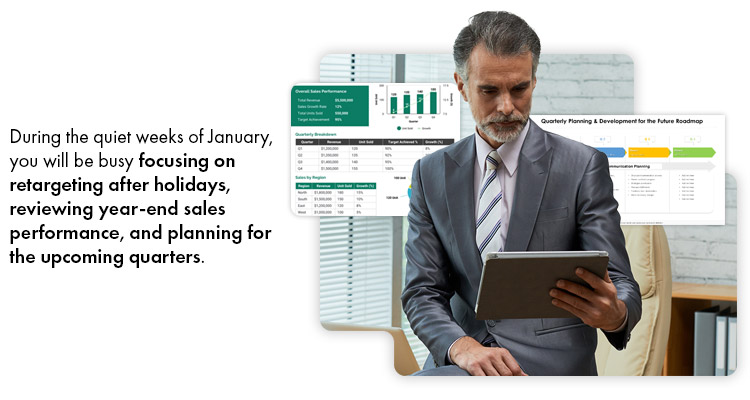
During the quiet weeks of January, you will be busy focusing on retargeting after holidays, reviewing year-end sales performance, and planning for the upcoming quarters. Hence, it can be hard to track the non-core functions, especially the administrative part.
This is where Remote Staff comes in, providing you with skilled remote workers who can take care of the following tasks:
- Ecommerce order management;
- Customer service for returns;
- Campaign production;
- Data cleanup and inventory tagging; and
- Social media scheduling and moderation.
Remote Staffing Partner
For the past 18 years and counting, Remote Staff has partnered with over 3,000 Australian SMBs and business owners. They provide English-proficient Filipino professionals who are skilled and ready to help you prepare your business for the year ahead.
With the four-hour time difference between the Philippines and Australia, your Filipino remote team is online exactly when you are. They’re also available based on your needs – whether for a one-off project, part-time work, or a long-term engagement.
More importantly, Remote Staff offers transparent pricing and onboarding packages.
You can hire remote workers directly through them, or leverage their Employer of Record services. Either way, they provide upfront costs to help you determine which options best suit your needs and budget.
Frequently Asked Questions
Here are some of the frequently asked questions about the post-Christmas sales recovery.
#1. Why Does Ecommerce Slow Down in January in Australia?
Families are redirecting their remaining budgets toward essentials, such as back-to-school needs. Many Australians also receive their credit card statements in mid-January, which are often high, prompting an immediate slowdown of discretionary spending.
#2. How Can I Improve January Conversion Rates?
Use the quiet period to showcase reviews from December shoppers. Seeing that others had a positive experience can help build the trust needed to convert hesitant January buyers.
#3. Should I Lower My Prices or Focus on Customer Experience?
You can use price drops to manage inventory, such as excess holiday-themed items.
At other times, focus on value-added offers – free shipping, extended warranties, or flexible payment options – to ease the financial burden on customers without cutting into your margins.
#4. What Kind of January Promos Work in AU Retail?
The AU market usually love:
- Bundle and Save – Bundle complementary products (e.g., yoga mat with a water bottle) to increase the average order value.
- Mystery Boxes – Aussies love a “deal” and the gamified nature of a mystery box can drive high engagement on social media.

#5. Can Remote Teams Really Help During Slow Sales Seasons?
Yes! Although sales are relatively low, your administrative and creative needs are often at peak due to returns and seasonal sales planning.
Fortunately, a Filipino remote team can help by:
- Handling the influx of January returns and customer inquiries;
- Building your marketing calendar for the rest of the year;
- Cleaning up your mailing list; and
- Optimising your SEO.
Conclusion: January Doesn’t Have To Be a Sales Graveyard
January doesn’t have to be a period of stagnation. It can be a fresh start and an opportunity for your business to plan for the year ahead.
It’s the perfect time to stop working in your business and start working on it. Clear out your inventory, re-engage with your customers, invest in your local SEO, and personalise your marketing efforts.
Every action you take now helps build the momentum needed for a successful first quarter – and, ultimately, a successful year.
For more information on how to get all of this done quickly and efficiently, call us today or request a callback now.

Syrine is studying law while working as a content writer. When she’s not writing or studying, she engages in tutoring, events planning, and social media browsing. In 2021, she published her book, Stellar Thoughts.