
What is an offshore remote architect?
A remote architect works from somewhere else and supports your projects over the internet, a.k.a. online. The work includes drafting, 3D models, renders, and construction documentation. If you run an architecture studio or a property group, you can take on a heavy month without adding another specialist to your payroll. Files move through shared drives and design software. Anything that depends on local rules, compliance or formal sign off goes to a professional based in Australia for review before it leaves your hands.
One caution on wording: the title “architect” is legally protected here, so an offshore drafter or designer shouldn’t be advertised as a registered architect.
Wait. Architecture project workloads can be offshored? What are remote architects again?
Another “wait” moment: there’s a shortage of architects in Australia; good people are just too tough to find these days (months, and into the next decade, as hiring data suggests). Hence the way-too-high rates of local hires.
The Association of Consulting Architects have been seeing it, too:
42% of surveyed practices reported difficulty finding staff.
There’s a second number, 72%, and it has to do with cost escalation.
The pressure’s so great, firms left and right are turning away work. Even the projects on the books are swamping teams, workflows turning into sludge that’s more and more difficult to trudge through.
But there are a handful that aren’t finding themselves in the same predicament.
Here’s where smart businesses are hiring architects from. You know from where, so this article guides you through what the role is and what tasks you can offshore, and more.
In This Blog:
- ➤What is an offshore remote architect?
- ➤Why Are Australian Firms Choosing Architectural Draft Outsourcing?
- ➤What Tasks Can You Outsource to an Offshore Architect?
- ➤What Can Remote Architects Do For Your Business?
- ➤What Are The Benefits of Hiring Remote Architects?
- ➤What Are The Challenges of Hiring Remote Architects?
- ➤Remote Architects vs Local Architects
- ➤What Should You Look For When Hiring a Remote Architect?
- ➤How Is Digital Collaboration Changing Architectural Work?
- ➤Remote Hiring Is Better Left to the Experts
- ➤FAQs
Why Are Australian Firms Choosing Architectural Draft Outsourcing?
Because of the two reasons mentioned in the opening section, and more on top of that – irregular workload volume per week, or month, or season.
Regular site visits and constant client contact are for your local architects to keep in their weekly to monthly calendars. For the rest, workload that’s often uneven, often teetering in between light to a barrage of planning submissions and design development deadlines? Remote support takes care of them.
Easily.
Is Architecture Staffing Tougher in Metropolitan Cities in Australia?
One would think that. The irony is regional practices feel this most. If you run a firm in regional Queensland, Western Australia, Tasmania or inland New South Wales, finding an experienced drafter nearby will take months.
Another reason why regions are (some have begun sooner) hiring professionals from architectural drafters to remote architects, even on the other side of the Pacific.
What Tasks Can You Outsource to an Offshore Architect?
Plain and definite role division is key to all this.
Here’s an example: Your outsourced architecture virtual assistant prepares the documentation, and an Australian registered architect reviews and checks it against compliance before signing off.
In a phrase, quality and accountability remain local.
What Can Remote Architects Do For Your Business?
Scope depends on the person’s experience, and then your process and local rules, so decide which tasks go offsite before you hire.
How Do Remote Architects Work With Australian Teams?
Treat them as an arm of your team. Unless you’re hiring full-time, then a real team member, just in a different geography.
Sharing the latest files, explaining what needs to be done, using the same software and settings, agreeing on deadlines, and keeping communication open for feedback and revisions.
What does an architecture handover include?
Two parts in the first handover:
The written brief
- Project stage and expected output
- File format and drawing standards
- Deadline
The working files
- Current models and markups
- Consultant drawings
- Templates and title blocks
How the Review Process Works
- Review points on larger tasks: Break big jobs into checkpoints so errors surface early (and, thus, cheaper and quicker to mend).
- Visual feedback: Use screenshots or quick screen recordings to point out changes, and keep all feedback in one place; everyone should be able to see what needs fixing and what’s been updated.
- Local sign-off: Senior staff on your side review the work before it reaches a client, consultant, authority, or builder.
Hybrid and remote teams coordinate through video calls, shared drives, cloud-based models and messaging apps.
Time zones: overlap or overnight?
Both approaches work. Simply pick one deliberately.
- Overlap: Share working hours for quick questions and live reviews within those hours the local and remote teams share.
- Overnight: Send markups at the close of the Australian day and find progress waiting the next morning.
Agree on when everyone should respond – reply windows or schedules for expected response. Make sure the details are sorted before the billable work joins in the fray of the rising tide of drawings and revisions.
What Are The Benefits of Hiring Remote Architects?
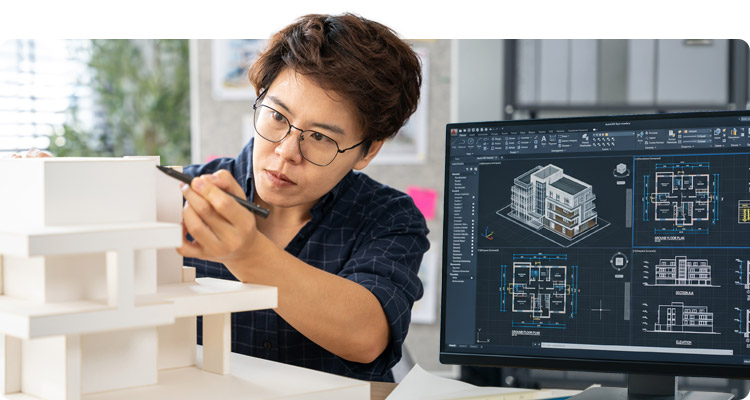
- Flexible capacity: Your workload swings. By working with offshore architects, you add support when deadlines bunch up and ease off when they clear.
- Specialist skills: Need BIM coordination, residential documentation, commercial fit out experience, or strong visualisation? Searching beyond your commute zone widens the field.
- Room to grow without premises: Capacity rises while your office stays the same size, office expansion not needed.
- Cleaner processes: Your templates and documentation tighten up, and your local team gets the benefit too.
- Lower total cost: Once on costs are counted, the total usually comes in below a local hire. Test it with your own numbers using our Free Outsourcing Calculator Tool.
Results depend on onboarding, regardless of the level or breadth of experience of who you choose to work with.
What Are The Challenges of Hiring Remote Architects?
Remote architects need to work with, or learn to work with, your existing processes. If your files are outdated or nobody has agreed on how revisions should be handled, you best believe things will get messy.
Rules can differ from one council area to the next, so your remote architect needs to know which requirements apply to your project, every single time.
- Local knowledge: Not every remote hire has Australian project experience. Anything tied to approvals and consultant coordination needs a reviewer who knows the local context.
- Scope: If the instructions aren’t clear, you may end up spending more time correcting the drawings than having your local team work on it. That is, of course, on top of their existing tasks.
- Software: Your team may use different versions of the same program, and the files may not open or look the same on both ends.
- Information security: Drawings, contracts, and site data need agreements, permission controls, secure storage, and straightforward file-handling rules.
- Isolation: If remote staff members aren’t kept in the loop when decisions are made or changes come through, they can end up working from old instructions, or no instructions at all.
Everything in this list can be avoided merely by following through with clear instructions and written standards.
Add regular reviews and SOPs about the approval process and person-in-charge to help prevent most of these problems.
Extra Read: Here’s something about the Five Types of Architects and How to Hire Them Online.
Remote Architects vs Local Architects
There’s no pitting one against the other. That’s like comparing a local footy club to the away team – it just doesn’t make sense to do a toe-to-toe slugging match in the which-one-to-hire arena.
Most Australian practices use both. Hybrid.
Here’s how tasks are usually delegated in terms of local and offshore staff:
Do the “workflow test” by asking who does this or that task, where someone has to be physically present for it to get done properly.
Site inspection and deep council knowledge are obviously local only.
Structured work that’s digital is for your “away team.”
What Should You Look For When Hiring a Remote Architect?
Portfolio first, similar to any other related role and industry. Residential, commercial, retail, education, hospitality, industrial, and apartment projects. Highlight those that align with what your firm frequently works on.
Portfolio checked? Now, software fluency (the ones your team use). Then written communication in updates, questions, and handovers. There’s attention to dimensions, naming, and revisions, and availability that fits your deadlines.
Candidates without Australian experience should be willing to learn your standards.
A Practical Checklist Before Hiring a Remote Architect:
- Roles and Approvals
What exactly do you need? Concept support or drafting? BIM? Rendering or wider project help? Decide on the “who” of each work, from briefs to in-house sign-offs.
- Standards and Files
Gather templates, title blocks, drawing standards, naming rules and example files. Confirm everyone is using compatible software versions and plug-ins, then agree on which platforms to use for sharing files and discussing changes.
- Communication
Meeting times should be written and carved in stone. Everyone who’s someone (those who need to be present in any huddle) has to be there, and on time.
Same rules for other communications like replies and escalations. In-house and remote team members are to follow those windows down to the last dot and dash.
No disappearing into the inbox black hole.
- Paperwork
SOPs and working agreements are to be in writing. As detailed as can be, with no room for doubt and ambiguity.
Another thing to decide on: whether Australian project experience is required. Base this on the majority of work your team gets clogged with (instead of a certain bias; just being frank here).
- First project
Sort out feedback as you go by beginning with something small, early on and before the deadline peeks through the blinds.
Extra tip: a paid trial task makes this easier, too.

How Is Digital Collaboration Changing Architectural Work?
Cloud platforms, shared models, digital markups and video meetings let a Melbourne practice work with a modeller in Brisbane and a renderer overseas. Client location? Perth. The same has eyes on the same file.
Extra hands on drafting or 3D renders can be all hands in whenever the workload rings and comes bounding in. Your core staff stays focused on clients and design decisions that need their attention, as they should, and as their expertise calls for.
With the right people and tools in place (and by “place,” geography no longer indicating physical boundaries), studios have more room to take on work without stretching their in-house staff thin.
Remote Hiring Is Better Left to the Experts
Experts whose repertoire has to do with vetting offshore candidates. Those who know how to look into what businesses need, no matter the industry, and find not the best, but the most ideal specialists for every business.
That’s Remote Staff. As a managed provider, we’ve been matching Australian SMBs with outsourced architects for more than 18 years. We know what we’re doing, and you can trust that we do it well.
It’s just your first hire, either. Our support is for the long term, growing as your business does. So as you have the need to expand your workforce more and more, as your client base broadens, and your services reach for the skies, we’ll be there with you.
A tip from us to you:
Because the title “architect” is restricted in Australia, write your listing for an architectural drafter, designer or BIM modeller, and keep locally registered, formal approval in place.
FAQs
Can remote architects replace a registered architect in Australia?
No. Remote architects can take on drafting, modelling, documentation, rendering and design development, but approvals, compliance, client accountability and approvals stay with a registered Australian architect. Each state and territory runs its own architect registration board. A blended workflow works well, with remote staff handling structured production and senior local staff reviewing and issuing.
Which businesses benefit most from remote architects?
Architecture studios, builders, construction firms and property groups that need extra design or documentation capacity gain the most. Midsize firms with uneven workloads and regional practices with a thin local talent pool see the clearest value. Teams short on BIM, CAD, or 3D visual skills benefit as well.
What should I prepare before hiring a remote architect?
Prepare a clear role, written briefs, templates, drawing standards, software requirements, communication rules, and named reviewers. Put privacy, intellectual property, payment and file access terms in writing. A small trial project shows you technical skill and communication style before you hand over complex work.
What are the main risks of working with remote architects?
The main risks are unclear scope, software mismatches, slow feedback, uneven quality, local compliance assumptions, data security and isolation from your team. Clear briefs, secure file systems, regular reviews, written standards and an approval path led by someone who knows Australian projects cover most of them.
When is a local architect the better choice?
Choose local when the role needs frequent site visits, in-person client workshops, authority discussions, council knowledge, or immediate collaboration. Remote architects suit work that is digital, structured and easy to review. Many businesses combine local leadership with remote production.
Extra Read: Here’s a list of the Top 25 Architecture Websites Redefining Design.
Support Your Local Architects With Architect Support Overseas
Design, drafting, modelling and documentation support? You can bring architects in to take care of them without limiting your search to your own postcode. It works because offshore architects know what the responsibilities entail. They’re experienced in them.
All you have to do is be consistent in defining the scope of the work and the details therein, and checking quality. Keep local oversight wherever Australian compliance or client accountability’s under the watch of a registered local professional.
Most of the setup’s ready with your and your firm’s standards. Now, work with the offshore architect who’ll observe them like it’s nobody’s business but yours.
Find your ideal remote design and drafting talent and Request a Callback today.
find the roles You need

Vaune Everis Cura has always been a writer in the truest sense, drawn to the art both as a personal creative pursuit and as a profession. Her experience penning content across digital marketing spaces and collaborating with business owners and market shapers has broadened her craft to include strategic direction and SEO insight. Having spent years with the InterContinental Hotels Group before stepping boldly into freelancing, she understands that at the centre of it all are genuine, meaningful brand–customer relationships built on purposeful, human content.