What is an MYOB accountant?
An MYOB accountant uses MYOB software to manage a business’s accounting tasks, from recording transactions and reconciling bank accounts to maintaining payroll records. Depending on their experience and qualifications, they may prepare financial reports or assist with GST and BAS requirements. Their work helps keep financial records current for review by the business owner or accountant.
Wait, “What is an MYOB Accountant?” Isn’t an “accountant” the same across tools?
Their expertise, flexible enough to be remolded according to the platform they’re required to use?
Can’t you let your general accountant train for MYOB?
Well, yes, to those questions, with some explaining warranted. It’s one to the other, and the other way around – accountants of any type can learn the software. A general accountant can learn MYOB, and an MYOB specialist may have the accounting expertise to handle general accounting tasks.
However, one word that hits the spot is: experience. Oh, and another: expertise.
If your business relies on MYOB for its day-to-day bookkeeping and payroll, is the learning curve, and how much that’ll cost your business in time, productivity, training costs, and potential errors, worth it?
Why hire an MYOB accountant?
Why are your competitors outsourcing them?
In This Blog:
- ➤What is an MYOB accountant?
- ➤What Are MYOB Job Responsibilities?
- ➤Why Hire an MYOB Accountant?
- ➤Benefits of Hiring an MYOB Accountant
- ➤Why Are Australian Businesses Outsourcing MYOB Accounting Support?
- ➤Which Businesses Can Benefit From MYOB Support?
- ➤How Better MYOB Records Help You Run the Business
- ➤What Should You Look for When Hiring an MYOB Accountant?
- ➤Find Remote MYOB Support for Your Australian Business
- ➤FAQs
- ➤Getting Started With Remote MYOB Support
What Are MYOB Job Responsibilities?
MYOB daily responsibilities are carved into a many-sided block, so that there are times when the type of work isn’t the same today and tomorrow. Anything from bookkeeping to more involved accounting work.
Your requirements will depend on the size of your business and the condition of your records.
Some duties an MYOB professional takes care of:
- Bookkeeping: Since MYOB is where the business’s everyday transactions are recorded
- Bank reconciliation: The MYOB specialist needs to smooth out where the issues are in disagreements between bank balances and MYOB figures
- Accounts payable: Supplier bills need to be entered and kept track of before due dates pass.
- Accounts receivable: Monitoring of unpaid invoices and overdues
- Payroll processing: Correct calculations of tax withholding and superannuation.
- GST and BAS support: Organising GST figures and preparing your Business Activity Statement (BAS); lodgement may need to be with a local authorized specialist
- Financial reports: MYOB can generate a profit and loss statement to help you see how the business performed over a given period – your accountant can then interpret the figures and advise on financial decisions.
- Month-end procedures: Further investigation of outstanding transactions and unexplained balances
The work varies depending on the state of the accounts and the business’s reporting requirements.
Transaction entry is a useful foundation; this is your MYOB’s to-do. Investigating complex accounting issues calls for deeper technical knowledge and is the responsibility of your accountant or registered tax/BAS agent.
Performing regulated services should be done by a specialist with the registration and qualifications specific to the work.
Why Do I Need to Hire an MYOB Accountant?
Why hire one as opposed to training a bookkeeper or general accountant for it? MYOB professionals are trained in, and experts at, checking on so many things that are peppered throughout accounting and financial admin work. Bank reconciliations and payroll week checks, along with updating accounts.
If you have a bookkeeper or a general accountant, bringing in an MYOB specialist gives them enough wiggle room to really drill down on their broader expertise instead.
You’d be surprised at how much more they can do in financial advisory and compliance duties, instead of re-training them for software that’s best in the hands of the expert it’s engineered for.
Benefits of Hiring an MYOB Accountant
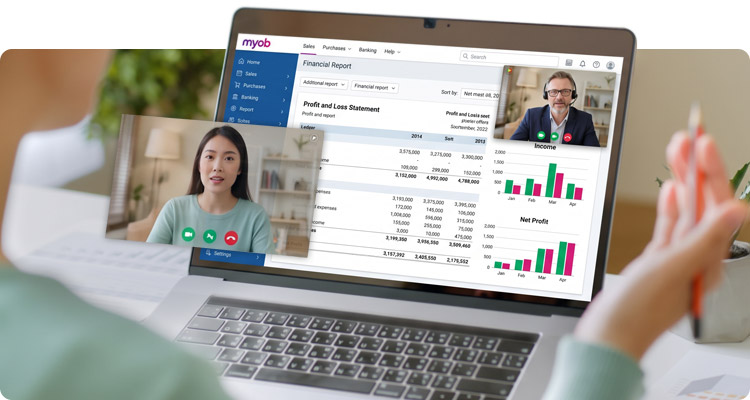
Someone who knows your MYOB system can work through its features without having to learn them on your time and from ground zero, and may spot ways to simplify the accounting processes you presently have in place.
They can help you get your accounts ready for BAS reporting. Your accountant will no longer have to panic-search for missing records when a lodgement deadline approaches.
There’s also the question of training.
An additional expense, no doubt. Plus the fact that you’ll be taking a professional off of what their responsibilities really are, leaving those to languish and pile up past their deadlines.
Hiring a General Accountant vs MYOB Accountant:
It’s safest not to think in a black-and-white, one-against-the-other perspective. Both roles complement one another, with tasks that align or adjoin where those ends meet. Think tax planning and day-to-day bookkeeping – your accountant can concentrate on tax obligations and advice, and your MYOB specialist maintains the records those decisions depend on.
“Software-specific” experience and expertise is the meaningful phrase to have in mind.
Why Are Australian Businesses Outsourcing MYOB Accounting Support?
There’s an accounting shortage in Australia, and it’s projected to go on into the next decade or so. We’re mentioning this first because of the urgency around it. Reports came in around 2021 to 2022. Not taken too seriously at the time.
Now, even larger authoritative bodies like CA ANZ (Chartered Accountants Australia and New Zealand) have released the data:
Australia could be short almost 18,000 accounting, audit and finance professionals by 2035.
More on this in our blog breakdown: Accountant Shortage in Australia.
A few more reasons why businesses are hiring remote MYOB accountants:
Access To MYOB Experience, Right Now
You reduce time spent on software training by hiring a specialist well-versed in MYOB setups.
Sure, they’ll still need to familiarize themselves with your team’s workflow in accountants and other procedures, but the time and expense will be less burdensome when they already know their way around the software.
More Time For Your Accountant’s Specialised Work
Mentioned earlier, but is worth repeating since this is among the cardinal motives why AU SMBs are offshoring. Albeit on their own, which is another accumulative problem in itself, but we digress (we’ll talk about this growing concern further below).
Once again, when a general accountant’s occupied with routine MYOB processing, their other responsibilities are benched. Outsourcing that work allows them to focus their energy on financial analysis and duties suited to their qualifications.
Work Arrangement (Engagement) Befitting to the Workload
If, at the moment, the workload’s isn’t in need of full-time going-over, offshoring’s a practical alternative in preference to a full-time arrangement. You can arrange the hours according to work volume.
Having said that, MYOB work, as a business grows, grows in volume as well. When you outsource, transitioning a part-time hire to full-time is simple.
In fact, if you work with a managed provider, you won’t have to do any of the transitioning and engagement-shift work at all. They do it for you.
A Wider Pool of Candidates
Candidates who can be hired faster than if you were to try and scour through the scant number of qualified accountants in your region or territory.
Going back to the topic of managed providers, they do the vetting. They have the tools and the strategy to narrow down a list of hundreds of offshore accountants and handpick only the ones who are most ideal for the expertise you require.
They’re not limited by geography and can typically be onboarded with no delays.
Clearer Responsibility for Routine Accounting Tasks
When a specialist has an agreed scope of work, you know for sure who’s responsible for maintaining the MYOB records and following up on outstanding items. They won’t be sunk under the heap of your bookkeeper’s or accountant’s own work.
Which Businesses Can Benefit From MYOB Support?
MYOB accounting support is basically for any businesses in any industry that utilise MYOB. The software offers different products for different business sizes and needs.
What Business Type Uses MYOB:
A handful of monthly transactions might warrant help if its records are several months behind. The same is true for work that needs to keep moving in terms of hundreds of routine transactions.
Which tasks are repeatedly delayed? How much time do they take? Are errors becoming more frequent? How’s the workload like, overall? These will help you decide whether to hire occasional bookkeeping help or ongoing MYOB support.
How Better MYOB Records Help You Run the Business
Better MYOB records set your feet on the ground and away from the clouds – it gets you, the business owner, and your leadership team to make smarter, more realistic decisions regarding expenses and purchases.
They clear the smoke so that you’re able to say yes or no to taking on another commitment. And another, if the records signal that you can.
Some reports that require regular review:
- Profit and loss statement: Reviews income and expenses over a chosen period.
- Balance sheet: Summarises assets, liabilities, and equity at a particular date.
- Cash flow information: Helps you understand the movement of money into and out of the business.
- Accounts receivable ageing: Shows how long customer invoices have remained unpaid.
- Accounts payable reports: Help you monitor supplier bills and upcoming payment commitments.
Your specialist can maintain the accounts and flag unusual figures. Budgeting and decisions (plus forecasting) about the future may require further analysis from you or a suitably qualified adviser.
The reports are only as reliable as the information recorded in MYOB is accurate and current.
What Should You Look for When Hiring an MYOB Accountant?
Here’s a breakdown of the skills or qualifications to look for in an MYOB accountant, along with what each brings to your business:
1. MYOB Software Proficiency
Experience with the specific MYOB product your business uses, including the features required for your day-to-day accounting tasks.
2. Bookkeeping and Reconciliation
Practical experience maintaining financial records, reconciling bank accounts, and resolving discrepancies.
3. Payroll and Australian Compliance
Knowledge of relevant Australian payroll, superannuation (more about Payday Super Guidelines here), and GST requirements. For paid BAS services, check whether the candidate needs and holds registration with the Tax Practitioners Board.
4. Accounting Qualifications
Qualifications appropriate to the role. A bookkeeper handling routine transactions may have different credentials from a qualified accountant providing broader accounting advice.
5. Problem-Solving and Attention to Detail
Ability to investigate unfamiliar transactions, recognise inconsistencies, and ask for supporting information when figures need clarification.
6. Data Security and Confidentiality
Familiarity with access controls, secure document handling, and protecting sensitive business and employee information.
7. Communication and Reporting
Able to explain discrepancies, document outstanding issues, and communicate clearly with your team or external accountant. If you need someone to maintain your MYOB records, prioritise hands-on software and bookkeeping experience.
For payroll, BAS-related work, or broader accounting responsibilities, check the additional knowledge, qualifications, and registration requirements that apply.
Extra Read: Learn about the Same Job Same Pay Bill and stay compliant in all parts of your business.
Find Remote MYOB Support for Your Australian Business
Your business is MYOB-wired, so it’s not that much of a leap (not a leap at all) to think of hiring a specialist whose software expertise is hands-and-feet deep into MYOB. It’s about time you hired an MYOB account.
But how? There are few qualified candidates within your region. Outsourcing’s the next pool you’re looking to dive into, like other AU businesses – do you really have time and resources to go through candidate after candidate? Mind you, sometimes, depending on the season, they drop in by the hundreds.
That’s where we step in.
Remote Staff has been pairing Australian businesses with experienced MYOB accountants. The vetting is all on us; it’s our expertise. We make sure to narrow the hundreds to a handful of the most ideal specialists who’ll fit right in with your team.
FAQs
What is an MYOB accountant?
An MYOB accountant uses MYOB to work on a business’s accounts. That could mean keeping the books up to date or dealing with accounting work that calls for more experience. The title alone won’t tell you how much they can take on.
Can a general accountant learn MYOB?
Certainly. Accountants learn new software throughout their careers, and some will know MYOB very well. If yours is making the switch, allow time to learn your particular setup and the way your business handles its accounts.
What is the difference between an MYOB accountant and an MYOB bookkeeper?
The two roles can overlap, with a bookkeeper maintaining and reconciling transactions, and an account fulfilling a kind of financial advisory role.
Can I outsource MYOB bookkeeping in Australia?
You can hire a remote MYOB specialist because the work can be done without the person being in-office. As long as you’re clear about the work to be done and who’ll do the reviewing, along with account permissions and financial information security (granting access, logins only to tasks specific to the professional’s responsibilities, etc.)
Can an outsourced MYOB specialist handle payroll?
Yes. You can delegate the processing to an external specialist. Simply define who in your team reviews figures and approves pay runs, since you remain the sole responsible party for meeting Australian obligations around payroll.
Can an MYOB bookkeeper lodge my BAS?
Check their registration first. BAS services for a fee generally require registration with the Tax Practitioners Board. A person who maintains your MYOB records may not be authorised to lodge your Business Activity Statement (BAS).
How much does it cost to hire an MYOB accountant?
You’ll need to get a quote based on the work involved. Some businesses only need occasional help with their books; others require ongoing support across more of their accounts. Ask what the all in fees are – there’s no foul play in doing so. Ask if there are additional costs for extra work, extra hours, etc.
Extra Read: Here are a few tips on How to Find a Good Accountant.
Getting Started With Remote MYOB Support
There’s no benefit to delaying outsourcing MYOB support. There’s no point in “waiting” on the local shortage to ease up because it won’t, and that’s not us talking; the data says so. Remember what we said earlier about the low numbers of professional accountants coming in – something that’ll be on a slow crawl into the coming decade.
Offshoring MYOB professionals is nowhere near groundbreaking. Businesses, small and large, have been doing so for years, even before the world became familiar with the term “outsourcing.”
A remote MYOB accountant or bookkeeping professional can take on agreed responsibilities and be a team player. A team player as they fulfill their role while, at the same time, allowing everyone else in your team to put their own expertise to action in tasks meant for them.
Explore your outsourcing options and Request a Callback today.
find the role you need

Vaune Everis Cura has always been a writer in the truest sense, drawn to the art both as a personal creative pursuit and as a profession. Her experience penning content across digital marketing spaces and collaborating with business owners and market shapers has broadened her craft to include strategic direction and SEO insight. Having spent years with the InterContinental Hotels Group before stepping boldly into freelancing, she understands that at the centre of it all are genuine, meaningful brand–customer relationships built on purposeful, human content.