How do you find a good accountant?
You find a good accountant by looking for the right mix of registration, relevant experience, communication style, service capability, and transparent fees. Start with accountant recommendations from people in a similar position to you, then verify each candidate independently before you commit. The accountant who is “best” for someone else may not be the best for your business, income structure, industry, or stage of growth.
A growing business, when you peel the layers of its success, will get you to the onion’s core: good accounting.
One of the things at its core, anyway.
But there’s a core within the core – if we can do a play on words there: How to find a good accountant?
What is a “good” accountant?
Seems like an oxymoron, doesn’t it? Accounting is supposed to be… good. Otherwise there’s no point to it. It’s what makes the profession and the role the way they are.
As a business owner or manager who’s catching the tailwind of a business burgeoning into a proper little neighborhood or regional empire, how do you get to the best hire, then?
And here’s the other puzzling thing:
Why aren’t your competitors doing the hiring themselves?
In This Blog:
- ➤How do you find a good accountant?
- ➤How to Find an Accountant for Your Business?
- ➤How Do I Check If an Accountant is Qualified?
- ➤How to Verify an Accountant’s Qualifications?
- ➤How Much Do Accountants Charge?
- ➤Tips For Seeing an Accountant For the First Time
- ➤Don’t Hire an Accountant On Your Own
- ➤FAQs
- ➤Conclusion
How to Find an Accountant for Your Business?
As you search online, don’t limit your choice to location or price/cost/salary. It might be convenient to find an accountant near your area, or near your main office if you have a physical facility. But the ideal approach is to watchout for these specifics: quick response times, clear explanations, proactive tax planning, industry knowledge, or help during a difficult ATO matter.
You might be thinking that where the hire is is most important. You might thinking it’s easier to monitori work that way. Hold meetings on a second’s notice. That document sharing and submissions are easier tracked when everyone’s under the same roof. Office roof.
But these tasks can be done online or digitally, making physical presence a time-worn qualification.
Extra Tip: When finding a remote accountant, all you have to set up before the hire are cloud software, video call platforms, secure portals, and tools for digital document sharing.
Two more important conditions: they should understand your business’s needs and be able to use the systems that help manage financial records accurately and securely.
How Do I Check If an Accountant is Qualified?
1. Check Registration
Here’s Australia’s standard in terms of the Tax Practitioners Board: anyone providing BAS or tax agent services should be registered.
It’s also a safeguard for businesses since the TPB is a public register, and consumers can check whether an accounting specialist is indeed registered.
The TPB lists recognised professional associations, including Chartered Accountants Australia and New Zealand, CPA Australia, and the Institute of Public Accountants.
This is a good first stop because, as with any hire in accounting services, you’ll have to verify TPB registration before confirming the rest of what’s written on the resume.
2. Check Professional Standing
On professional designations, they’re helpful in narrowing down a large list of candidates. Not to be treated as a major qualifier. But a useful determiner of who gets to be placed on hiring Priority A, and who goes on the B-list, and so on.
Some of the more common designations are CPAs, Chartered Accountants, or members of the Institute of Public Accountants. Similar designations for remote professionals who are registered outside Australia.
3. Check Credentials
Credentials mean meeting certain standards in accounting practice. However, using it as the only qualifying criterion is that bit where it gets slippery. Though credentials are like neon lights pointing to the specialist’s knowledge and expertise, they’re not proof that the professional is the “right fit” for your business.
Someone whose background has been with large enterprises may not be the best fit for a sole trader. The same goes for a small-business accountant who isn’t the ideal candidate for complex tax, audit, or restructuring matters.
4. Match Their Experience To Your Business Situation
When considering how to find a great accountant, look for someone who understands compliance and context.
Compliance keeps you on the right side of the rules. Context helps an accountant use your financial information so you can look at and act on them towards better business decisions.
Useful signs of relevant experience will have them ask or talk about the following:
- Ask detailed questions about your business model, income sources, entities, employees, and goals.
- Explain common risks for people like you without trying to scare you.
- Can describe their service process clearly, including deadlines, documents, reviews, and communication.
- Familiar with the software you use (or can recommend accounting tools).
- Are honest about limits and will refer you to a specialist when a matter is outside their scope.
Narrow your search by telling them what you need help with.
How to Verify an Accountant’s Qualifications?
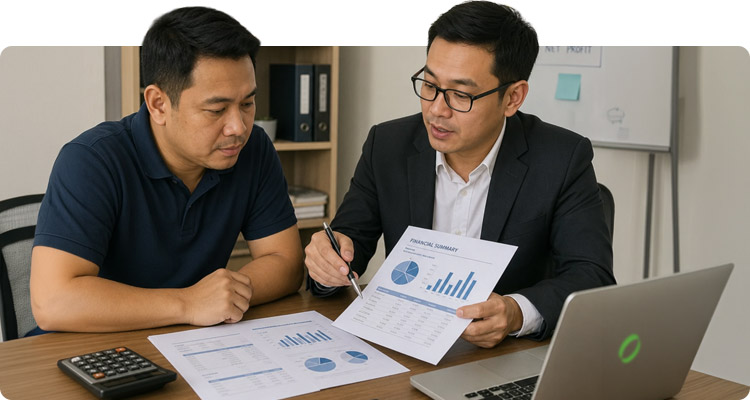
Before you hand over your financial records, take a few minutes to check the basics. You want to know who you’re hiring, what they’re actually authorised to do, and what you’re paying them to handle.
Here’s what to verify:
Other questions to guide you through verifying accountant details:
- Are you registered with the TPB for the services I need?
- Who will be my main contact?
- Who does the reviewing?
- Have you worked with clients of the same business size?
- What is included in your fee? (more on this in the next section)
- How do you go about missing information? Deadlines?
- What’s the ideal number for conducting meetings?
- Which accounting software have you used the most?
- How do you store and transfer sensitive documents?
- Can you help with tax planning before year-end (not just after it)?
- What happens if I receive an ATO query or audit notice?
The answers should feel clear (no heavy jargon, really), practical, and specific.
Related Read: Discover When Is the Right Time to Outsource Accounting.
How Much Do Accountants Charge?
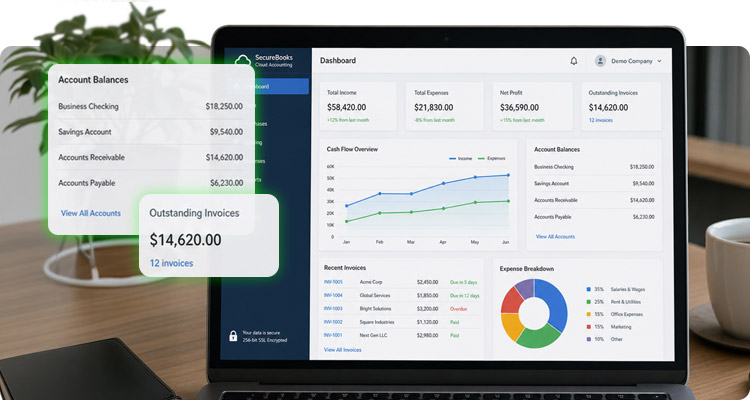
Accountant services are priced based on experience, tool knowledge, industry, and more. You also have the work engagement or engagement model to think about, from a fixed salary (for local hires, that means Super, leave entitlements, etc. on top of base), a monthly fee, per project, or hourly rates.
Get the details in writing.
What you’re quoted should also answer the following:
- What you’re paying for: tax returns, BAS, bookkeeping, payroll, financial statements, meetings or advisory work.
- What isn’t included: ATO correspondence, overdue work, amended returns, bookkeeping cleanup or other work outside the original scope.
- What you need to provide: documents, records and information, along with any deadlines you need to meet.
- How you’ll be charged: fixed fees, hourly rates, retainers, payment dates and any cancellation terms.
- What happens if things change: particularly if your business grows, becomes more complex or needs additional work
A low quote can be tempting. So can a beautifully packaged one with services you’ll never use. Compare what you’re actually getting rather than putting the numbers side by side and picking the smallest one.
Tips For Seeing an Accountant For the First Time
What to bring to an accountant meeting?
If you’re offshoring, bring these same things, virtually/online.
Come prepared with: What your business does. How it earns money. What software you use. How many people you employ. What you currently need help with.
A promising accountant will usually want to understand your situation before telling you what you need. They should be willing to explain their process and tell you who will handle the work. They’ll answer reasonable questions about fees, deadlines, and data security.
On fees, reliable accountants will be honest with you about it and won’t require too much prompting from you.
What Are Red Flags When Hiring an Accountant?
One who:
- Promise a particular tax result before looking at your circumstances
- Push you to sign before getting to the details (especially about fees)
- Dodge straightforward questions about who’ll be doing the work (if they work alone, with a team, an agency, etc.)
- Brush aside questions about how your financial information is handled
Accountant meetings aren’t like other job interviews where you or the hiring manager will have that feeling of, “Yep, we just found the one.” You might, but not overwhelmingly. Notably because all the candidates are likely real accountants.
That’s okay. What’s important is you’re able to understand and narrow down who among the candidates are most ideal for your operations.
Don’t Hire an Accountant On Your Own
This is why businesses don’t often make the hire themselves. There are so many considerations, so much to think about, from credentials to compliance. You don’t want to make the error of hiring a professional who’s an accountant. Legitimately. But then isn’t a match for your business or industry.
Let Remote Staff help you. We’ve been pairing Australian businesses with accountants, bookkeepers, and other specialists. We do the vetting based on your exact requirements. Payroll, HR, and onboarding are on us, too.
Our support isn’t only during the hiring process. We stay with you as you grow, helping you continue to make the right decisions when it comes to growing your operations.
FAQs
Do I need an accountant for my small business?
Not necessarily. A very small business with straightforward finances may be able to handle its own records and tax obligations, particularly when transactions are simple and there are few moving parts.
The question changes as the business grows. Employees, GST, more complicated tax obligations, a change in business structure, cash flow problems or an ATO letter you’re not quite sure how to interpret are all good reasons to consider professional help.
What does an accountant actually do for a small business?
It can go well beyond preparing the tax return. Depending on their services and registration, an accountant may help with financial reporting, tax compliance and planning, cash flow, budgeting, forecasting, profitability and business decisions.
The useful part is having someone who can look at the financial picture with you while there is still time to do something about it. Buying equipment, taking on staff, changing your structure or preparing for expansion can all have financial and tax consequences worth discussing beforehand.
Can an accountant help improve my business’s cash flow?
Yes. An accountant can review how money moves through the business, look at expected income and expenses, and help prepare cash flow forecasts or budgets.
That can be particularly useful when the business is profitable on paper but cash still feels strangely tight. Seeing when money is expected to come in and when major bills, wages, tax or loan repayments are due gives you something much more useful than a year-end snapshot: time to prepare.
How often should I meet with my accountant?
There isn’t a magic number. A simple business may only need an annual review, while many small businesses find quarterly conversations useful. A growing or more complex operation may need monthly contact, particularly when there are significant decisions or cash flow concerns to work through.
The better question is what you need from the relationship. If your accountant only needs to prepare and lodge routine work, you may have little reason to meet often. If you expect them to help you plan, spot issues and make decisions, waiting until tax time leaves rather a lot of useful conversation on the table.
Is data annotation work legitimate, or is it a scam?
Yes. You generally don’t have to wait until the end of the financial year to make the switch. Once you’ve chosen a new accountant, they can usually help with the professional clearance and transfer of relevant records and information.
And you don’t need a dramatic falling-out to justify it. Your business may simply have grown, your needs may have changed, or you may want more support than you’re currently getting. Sometimes the accountant who suited your business three years ago isn’t the accountant you need now.
Extra Read: Stay updated with laws around compliance and learn more about the WHS Legislation Australia and Same Job Same Pay Australia in relation to hybrid or remote teams.
Best vs The Right Accountant
The “best” accountant? Not exactly a real thing, nor a practical goalpost for finding the specialist. Accounting professionals, those who are registered, are experienced in the field, and carry credentials are, by and large, great at what they do. You rarely find an accredited accountant who can’t fulfill accounting responsibilities.
The question remains: How do I find a good accountant? But change “good” to “right.” Because that’s what you need – the right one. The right accountant for exactly what your business needs, and what your industry requires.
And finding that specialist can be a rabbit hole. Without experts helping you with the vetting. That’s where we step in. Simplify outsourcing accountants and Request a Callback today.
find the role you need

Vaune Everis Cura has always been a writer in the truest sense, drawn to the art both as a personal creative pursuit and as a profession. Her experience penning content across digital marketing spaces and collaborating with business owners and market shapers has broadened her craft to include strategic direction and SEO insight. Having spent years with the InterContinental Hotels Group before stepping boldly into freelancing, she understands that at the centre of it all are genuine, meaningful brand–customer relationships built on purposeful, human content.