What does a bookkeeper do?
A bookkeeper keeps a business’s financial records accurate, organised, and up to date. Their work typically covers recording transactions, reconciling accounts, managing invoices and expenses, and preparing routine financial reports. They give business owners and accountants reliable records to work from, helping them keep track of where the money is going and what still needs attention.
What does a bookkeeper do? You’re a business owner; you know the answer. Or have some inkling about what this professional does. You’re not new to the system after all, right?
Now add the words “remote” or “outsourcing.” The world just turned upside down.
Does the role still hold the same description?
What are the changes to what a bookkeeper does when the hire’s not only outside your region or territory, but beyond Australia’s shores? Oceans and thousands of miles away?
You’re here because you’re tossing it up between the two, possibly using your hands as you gesture, weighing one against the other:
Hiring an in-house vs remote bookkeeper.
And you’re teetering towards the latter (like many businesses, successful ones, are doing).
What do you need to know about this role as you prepare for the hire, and how local and outsourced engagement compare?
In This Blog:
- ➤What Is the Role of a Bookkeeper?
- ➤Why Are Bookkeepers Important?
- ➤What Are the Key Responsibilities of a Bookkeeper in Australia?
- ➤What Do Bookkeepers Do Beyond Data Entry?
- ➤What Are the Typical Job Specifications for a Bookkeeper? (Practical Guide)
- ➤Bookkeeper Job Qualifications and Skills
- ➤What Is the Difference Between Bookkeeping vs Accounting?
- ➤How to Hire the Right Bookkeeper
- ➤How Is Technology Changing What Bookkeepers Do?
- ➤FAQs
- ➤Bookkeepers Are Per Business, Per Industry
What Is the Role of a Bookkeeper?
A bookkeeper records, organizes, and maintains the financial transactions of a business. In doing so thoroughly, numbers are reliable and complete. Along with these responsibilities are: tracking income and expenses, reconciling bank accounts, managing invoices, supporting payroll, and preparing clean records for accountants, tax preparers, or business owners.
In small businesses, the role of bookkeeping specialists is on the more diverse side of things. Spotting overdue invoices and duplicate payments. Transactions that were imported more than once due to a software slip.
For larger businesses, all the way to enterprise levels, it becomes specialized. Niche even, when the company’s large enough to house several bookkeepers. One bookkeeper’s focus can be accounts payable while another is receivables, and so on.
Why Are Bookkeepers Important?
Bookkeepers are at the controls of ensuring accurate daily records for businesses. Without them, making financial calls becomes more labourious, absent of clear direction.
Tax planning, budgeting, forecasting, loan applications, and growth decisions all depend on the bookkeeper and the quality of the underlying books under their command.
What Are the Key Responsibilities of a Bookkeeper in Australia?
A useful bookkeeper job description is never without the daily duties that hold a business’s financial system, oil the cogs, and keep them turning.
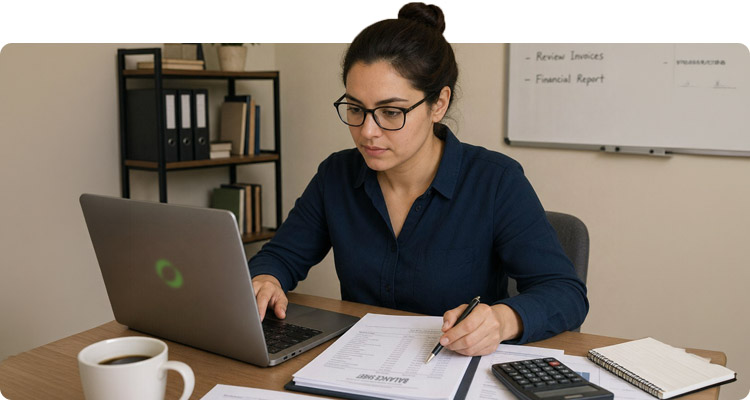
Everyday work that’s correctly viewed by people outside the profession as dreary and tedious. But this non-dramatic kind of work protects companies from confusion and errors that could tank the entire operation if left spiraling into “unaddressed.”
Typical bookkeeping responsibilities:
These eight are interlaced with one another. How? Neglect in bank reconciliations and follow-ups may precipitate missing or duplicate transactions and cash flow problems (unpaid bills).
Related Read: Here’s an accounting finance industry case study for a glimpse into the industry and profession, and marjor challenges.
What Do Bookkeepers Do Beyond Data Entry?
The premise is that real bookkeeper work is more than just data entry.
Ever heard of the term “modern bookkeeper?” Their job descriptions, apart from recording what’s happened in the financial life of a business, today include:
Software setup, workflow improvement, cash flow visibility, and collaboration with accountants or tax professionals.
Adapting the traditional into the modern is part of the description rewrite. The other? Cloud accounting platforms. They’ve remarkably sped up routine entry, without disregarding judgment. It’s still very much needed.
The human bookkeeper has to know and see where the “unusual” is and where it has come from.
They need to determine and detect anomalies in reports and transaction coding. In automation rules (though the more intricate work’s usually passed on to the automation specialist).
Many bookkeepers now help with practical financial operations such as:
- Setting up accounting software and chart of accounts
- Creating invoice, payment, and approval workflows
- Preparing information for budgets and forecasts
- Identifying recurring cash flow pressure points
- Liaising with accountants, payroll providers, or tax authorities
- Helping owners understand their reports/explaining what said reports mean
Note: Not all bookkeepers are financial strategists. But bookkeeper roles differ in that their experience and background may be different from someone else’s, even if technically, the title’s the same compound word.
Still, true to what we said about the role taking on more than its description, their scope’s turning into an advisory one as well.
Related Read: Here’s something about the top benefits of outsourcing bookkeeping.
What Are the Typical Job Specifications for a Bookkeeper? (Practical Guide)
A practical bookkeeper job specification should explain the purpose of the role and what the deliverables are. It should outline the systems used and even how much, or how little, independence is required, according to how your team operates.
Here is a practical structure your team can adapt and edit as you see fit:
Purpose of the Role
Not about the description of a bookkeeper. “Purpose” here talks about why the role is there and what the bookkeeper is expected to accomplish, from day-to-day tasks to long-term goals.
This specialist maintains accurate financial records and ensures consistent processing of transactions through timely reporting. The purpose is to help a business understand its financial position in order to make sound decisions, while also preparing for accountant reviews and tax obligations.
Core Duties
Their list of duties includes recording transactions, reconciling accounts, processing invoices, monitoring receivables, preparing payment runs, organizing documents, supporting payroll, and generating routine financial reports.
Others include inventory, project tracking, or multiple locations; the specification should say so clearly.
Systems and tools
The specification should list the accounting software, payroll system, payment tools, expense apps, and document storage platforms used by your business.
Some common examples: QuickBooks, Xero, MYOB, spreadsheet tools, and receipt management apps.
Just remember that the actual requirement should match your company’s setup.
Working relationship
The bookkeeper may report to whoever has oversight of a company’s finances. It could be anyone from an owner to a finance manager, an accountant, an operations lead, or others.
Explain the engagement for the role. Will it be in-house, remote, or hybrid? Part-time? Full-time? Project-based?
Expected outcomes
Do not, at all costs, use run-down, too-generic/too-vague descriptions like “must be detail-oriented.” This comes with the professions. Instead, cover reconciled accounts, organized records, timely invoices, accurate supplier balances, clean month-end reports, and fewer surprises at tax time.
Attention to detail is essential, but should also be a given. Focus on outcomes.
Direct Channel
Have questions? Drop our team a line anytime.
Bookkeeper Job Qualifications and Skills
Bookkeeper job qualifications vary by country, employer, industry, and how complex the work is.
Junior roles require at least a high school diploma or equivalent. Others don’t even require this, so long as candidates have strong numeracy and some experience with bookkeeping, or on-the-job training.
For advanced positions, experience with specific software, coursework, and certifications are among the prerequisites.
Credentials can vary depending on where the bookkeeper works and what the job involves. If the role involves lodging certain tax or business activity reports, the person may also need the right registration to do so.
Know your local rules and pass those on to the bookkeeper before assigning tasks or projects that have to do with compliance.
Just as important are these practical skills:
- Accuracy: spots small errors and corrects them as soon as they’re made
- Confidentiality: handles sensitive financial information with discretion
- Financial literacy: understands debits, credits, accounts, reconciliations, and reporting basics
- Software confidence: able to use Cloud accounting, bank feeds, automation rules, and digital records (many bookkeeping roles today require these)
- Analytical thinking: good eye for spotting unusual balances, missing documents, and patterns that deserve attention
- Communication: can plainly explain financial figures and reports without accounting jargon
- Reliability: manage deadlines, keep commitments, and follow tasks through to completion
The right bookkeeper improves financial discipline across the whole business.
What Is the Difference Between Bookkeeping vs Accounting?
Bookkeepers maintain the business’s records, day after day.
Accountants use those records to analyze performance, prepare higher-level reports, advise on tax planning, support audits, or guide strategic decisions.
Two different stages in the process.
Bookkeeper vs Accountant Difference (Role):
Bookkeeping is thought of as the “foundation.” Accounting is the “interpretation” and “advanced application” of that foundation.
Records need to be completed by the bookkeeper so that the accountant can extract meaningful analysis from them.
If books are riddled with inaccuracies or are incomplete, accountants will have to first correct those before moving on to their work of advice, planning, and compliance.
Qualifications of Bookkeepers vs Accountants
Accountants
- Formal education
- Professional qualifications
- Professional designations, especially for regulated work
Bookkeepers
- Bookkeeping certification
- Practical experience
- On-the-job training
- A combination of training and experience
How to Hire the Right Bookkeeper
Look for someone who understands your business’s workflow and carries the skills mentioned in the sections above.
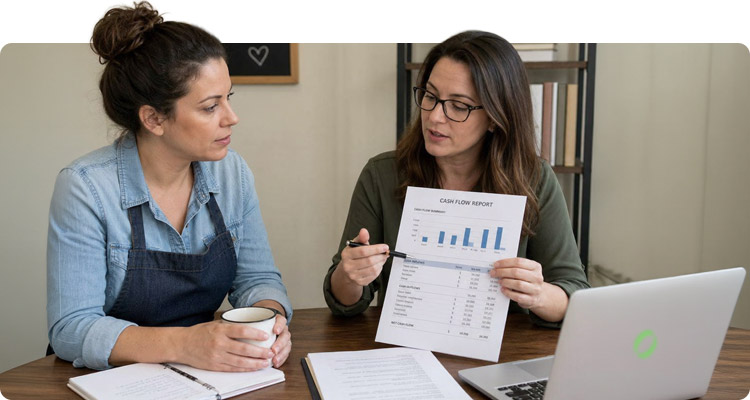
Here’s a short evaluation checklist when hiring:
- Relevant experience: worked with businesses similar to yours (including industry and complexity)
- Software: familiarity with the accounting platform and other systems your business uses
- Explaining Work Process: if they’re able to explain every part of their work
- Certification or training: if their qualifications match the kind of work you need
- Compliance: aware of compliance requirements (or have worked with clients where compliance – not necessarily in the same location – had its own set of rules
- Communication style: explain reports in plain language
- Availability: can meet your payroll and reporting deadlines
- Security practices: efficiency in handling passwords, documents, access permissions, and sensitive data
One Note on Hiring: You’ll have support going through these when working with managed providers.
They vet candidates according to the skills and qualifications you require, so you can turn your attention towards more valuable components of your business (and not get stuck at hiring).
How Is Technology Changing What Bookkeepers Do?
Automation has reduced manual tasks, by the mile. Bookkeepers are now able to give more time to checking for accuracies and flagging errors from automated entries and transactions.
Definitely great news to a team that banners productivity.
But on the other side of it is an aftermath (we’re trying to avoid calling it a “consequence”) of this sudden availability of automation tools is that business owners have upped their expectations in terms of bookkeeping work.
They expect faster reporting, cleaner dashboards, and smoother integration between sales systems, banks, payroll platforms, and accounting software. Many times, with little patience and an unrealistic pace and ceiling.
The Human in the Loop in Bookkeeping
That makes human review more important. Software can suggest categories and generate reports.
Context, though, isn’t within its language. Something harder to unearth unless the human bookkeeper is there, monitoring what the automated systems generate.
On that note, this is the right place to tell you, the business owner or manager, to:
Adjust your expectations. Speed isn’t the only KPI there is when you want to build sustainable processes in your financial administration. While maintaining a healthy work culture among your teams.
The best bookkeepers use automation to save time, then review the results carefully. They also help owners build better habits, such as uploading receipts promptly, separating business and personal spending, and reviewing reports before small issues become large ones.
A combination of technical comfort and efficiency with practical skepticism.
FAQs
How much does a bookkeeper cost in Australia?
Australian bookkeeping rates are around $40 to $120 an hour. Rates are higher depending on experience, registration, and work complexity. Location, too, since larger cities within Australia have higher rates in general.
Outsource or remote bookkeeper salaries are $500 to $2,500 per month, and the same unspoken rule follows – experience and account complexity pull that rate upward.
Can a bookkeeper do BAS?
Yes, but not every bookkeeper can legally provide BAS services for a fee. A bookkeeper who provides BAS services to clients needs to meet the requirements for registration with the Tax Practitioners Board as a BAS agent.
Always check the person’s registration and make sure the work falls within what they’re authorised to do before hiring for BAS work.
Do bookkeepers do payroll?
If the work means preparing employee pay data to keeping payroll records organised, then yes, they do. The scope depends on your arrangement with the bookkeeper, which needs to be cleared out before hiring and onboarding.
Can a bookkeeper work remotely?
Yes. It’s about working securely with your systems, maintaining appropriate access to financial information, and meeting Australian deadlines. All can be done working from home.
Extra Read: Find out what the ATO Crackdown means for AU businesses.
Bookkeepers Are Per Business, Per Industry
Today, bookkeeping is as practical as it’s technology-enabled. The core skills required for it are unchanged, as is the trust required to support business decisions on finance and growth.
Looking for bookkeeping skills is page one, where the rest of the read is about finding the right professional who has qualifications that match what your business and industry require.
What does a bookkeeper do? You won’t know until you begin the search. And we can do that for you. Reach out to Remote Staff and Request a Callback now.
find the role you need

Vaune Everis Cura has always been a writer in the truest sense, drawn to the art both as a personal creative pursuit and as a profession. Her experience penning content across digital marketing spaces and collaborating with business owners and market shapers has broadened her craft to include strategic direction and SEO insight. Having spent years with the InterContinental Hotels Group before stepping boldly into freelancing, she understands that at the centre of it all are genuine, meaningful brand–customer relationships built on purposeful, human content.