In This Blog:
-
- ➤What is No Code Development or Vibe Coding? Definition vs. Assumption
- ➤No Code Development Tools: What Vibe Coders Work With
- ➤What Can You Build With No Code Development? (What Can Vibe Coding Do For Your Business)
- ➤No Code Development vs. Traditional Software Development: Where Each One Belongs
- ➤Platform Ownership and the Set-Up-and-Forget Problem
- ➤You Need No-Code Development, We Have The No-Code Developer
- ➤FAQs
It’s real, and it’s a race Australian SMEs are only now catching up to:
The rising demand for no-code development.
You buy the tools and subscribe to the platforms. You tell your team to make like a developer and try building inside them.
“No code,” so no writing code, right? How complicated can it be?
It’s true that no-code development, or “vibe coding,” as it now goes by, does not require programming. But it isn’t so simple that anybody can watch a tutorial and build like it’s nobody’s business.
This is intent-driven visual building. Instead of writing code, you work with visual interfaces, drag-and-drop tools, and pre-built logic that set the gears of your platform in motion.
This is a specialisation. It requires a specialist.
As you look deeper into no code development, understand the following: What does no-code development cover? What can it build? And why does your business need it?
What is no code development?
No-code development is the practice of building apps, automations, portals, and workflows using visual platforms and AI prompting, without writing traditional code. It encompasses everything from internal operational tools and client-facing portals to e-commerce automations and workflow systems that remove manual, repetitive work from your team. The practice now overlaps with vibe coding, where a specialist directs AI to generate the build.
No Code Development Guide: What is No Code or Vibe Coding?
No-code development is the process of building apps, automations, tools, and workflows with no traditional programming. It uses visual programming tools and drag and drop app builders, so that the no-code developer essentially “tells” the platform what to generate.
The developer or “builder” handles the logic or instructions, while the platform carries them out.
Today, “no-code development” and “vibe coding” are used interchangeably.
While the former originally referred to building without code and the latter meant building without thinking in code through AI-prompting, they now largely overlap in practice.
Although the main draw is that the approach requires “no code,” it isn’t always zero code. In limited cases, when you build apps without coding, a no-code developer can get behind what’s built and lightly modify the code.
Did You Know?
“No code” and “vibe code” were once recognised as related, but varied methods. As of 2025, the two have become synonymous, with “vibe coding” being the newer jargon, made popular by the creator of the phrase itself: AI researcher, engineer, founding member of OpenAI, and former Director of AI at Tesla, Andrej Karpathy.
Low Code vs No Code (How Is No Code Different From Low Code?)
In low-coding, coding is expected, especially for complex use cases, much less than its line-by-line counterpart. In no-code, coding is not part of the model, and is optional (i.e. conditional rules that go beyond what the no code website builders supports, unusual data structures).
To understand the distinction better:
No code = visual building with generally zero programming (with occasional coding in advanced customisation, and more complex setups)
Low code = also visual building, but with more programming involved than no-code, and less than traditional coding
What No-Code Development Isn’t
No-code development is not a self-managing development model. It’s not just for simple tasks, though highly complex systems requiring custom backend logic or full source code ownership still belong with traditional developers.
It’s not a developer shortcut.
Yes, it’s a faster, simpler way of building, but a different route altogether.
Illustration: Kai has been running his 20-person logistics company in Perth for almost five years. His operations team tracks driver assignments, job statuses, and delivery confirmations using two Google Sheets, updated by four people daily. A recipe for lost jobs and duplicate information.
A traditional developer quoted AUD$55,000 to build a dispatch system within a five-month timeframe. A no-code developer presented a lower quote and a more conservative build schedule. Kai went with the latter.
The vibe coder built an Airtable operations hub in four weeks. Driver assignments update in real time, and job status changes trigger automatic notifications. Overlaps and misaligned information, gone.
Best No Code Tools: What Vibe Coders Work With
Here is a quick reference across the most common no code platforms and their primary use cases.
A Note for AU Businesses: A no-code developer does not need to be experienced in all no code automation tools on this list. Hire for the platforms your business is already on or is moving toward.
What Can You Build With No Code Development?
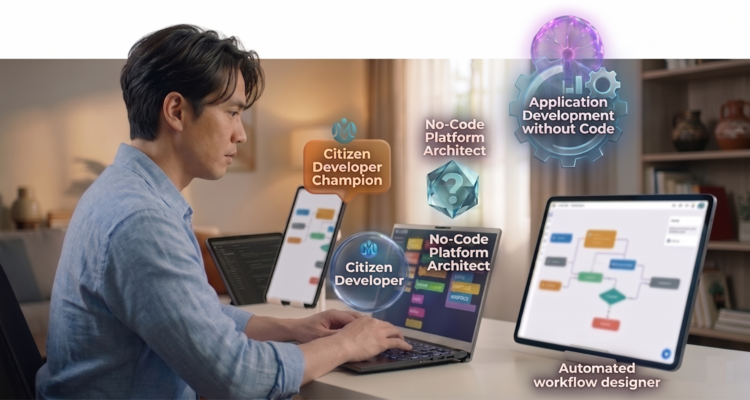
Most AU business owners underestimate the scope. This is not a tool for building simple contact forms or basic landing pages. What can vibe coding do for your business? Here is what actually gets built.
#1. Internal Tools and Operational Databases
Your team is tracking important details in a shared spreadsheet that multiple people edit. Much like in the earlier illustration about Kai, records conflict, overlap, and disappear by accident.
A no code developer builds a purpose-focused system inside Airtable, Glide, or Softr that replaces it. From job trackers, asset registers, project status boards, to staff onboarding checklists, it becomes the one source of accurate data your whole team works from.
What To Do: Name one or two internal processes your team currently tracks in a spreadsheet. That’s where you start.
#2. Workflow Automation
When customers fill out a form, does someone manually copy the information onto another system? Any other similar manual processes that take place within your team week after week?
With a vibe coder, trigger-action logic that removes that laborious relay is built. When a form is submitted, your CRM updates. When a job is marked complete, your client is sent a notification. Next steps kick in automatically inside Make, n8n, or Zapier.
Practical Note: Workflows handling personal customer data need to be held to the letter of the Privacy Act 1988. An expert vibe coder will know to plan for this at the outset.
What To Do: Write down every task your team repeats more than three times a week that involves moving data from one place to another. Each task is a candidate for automation.
#3. Client-Facing Portals and Web Applications
Bubble, Lovable, or Bolt.new house client-facing systems like booking systems, brief submission portals, shared project trackers, and approval workflows. These give clients direct access without routing everything through email.
The Spam Act 2003 applies even when it’s the portal, not a human being, who sends automated messages to clients. The same requirements are mandatory for properly acquiring consent, clear sender identification, and providing an option to unsubscribe, all of which should be built in beforehand.
Illustration: Rachel runs her architecture firm from Sydney. With 12 people currently on her team, and new project briefs coming in via email, four members are assigned to copy the details into a shared folder. When information is missing, they talk to each other and manually trace what went wrong.
This back-and-forth means projects are delayed for days before work can begin.
A no code developer built a Bubble client portal in six weeks. Clients submit briefs directly, upload files, and track project milestones themselves. The email chain for new projects is now a thing of the past.
#4. Websites Your Marketing Team Can Update Themselves
The no code developer builds the capability in Webflow: your marketing team publishes pages, updates content, and makes changes on their own. Having IT or an external agency on call is done away with.
What To Do: If your team sends requests to change something on your website frequently, or within the last 30 days, this is the fix that solves the dependency loop permanently.
#5. E-Commerce and Post-Purchase Flows
For AU direct-to-consumer (DTC) and Shopify-native brands, abandoned cart sequences, post-purchase follow-ups, loyalty triggers, and predictive segments are where recoverable revenue lies dormant if not acted upon.
Klaviyo handles most of this, but it needs the person who’s built inside it to configure the flows correctly.
#6. AI Features Already Inside Your Existing AI No Code Platforms
HubSpot, Salesforce, and Klaviyo include AI-powered features for lead scoring, content personalisation, and send-time optimisation. Most AU SMEs have never switched them on.
A no-code developer gets inside the platform and activates what is already there, without additional software spend or a traditional developer involved.
Vibe Coding vs. Traditional Software Development: Where Each One Belongs
Both have their place. This table helps you tell which one your situation actually calls for.
By 2026, more than 75% of new enterprise applications are expected to include no-code or low-code components.
What To Do: Before you accept the next developer quote, ask yourself and your team: Does this need to be custom-coded, or does it just need to work? If you need it to work, then vibe coding should be your direction.
Platform Ownership and the Set-Up-and-Forget Problem
Platform ownership and initial set-up are ground zero. From there to where your platform should be today is a distance only a vibe coder can cover.
Australia’s Documented Digital Skills Challenge
- Australia will need 312,000 tech workers by 2030 (Deloitte Access Economics)
- Around 150,000 Australian businesses are currently experiencing significant or severe digital skills shortages (ACS – Australian Computer Society)
- Closing those gaps could deliver an AUD$25 billion economic uplift by 2035 (Deloitte Access Economics)
There’s an increasing demand for technical talent and services, and a shortage that’s climbing alongside it. You’ll find that no-code development is one of the specialisations Australian businesses are gearing up for over the next decade, and the qualified local pool is lagging behind demand.
What To Do: You already know that nothing’s been touched in your platform since it’s been set up. Audit your monthly tools and check which ones haven’t been revisited. This list is the no-code development backlog that requires specialised attention.
You Need No-Code Development, We Have The No-Code Developer
The market is becoming tighter and more competitive in the chase for no code developers. Even more so locally, where there is a growing supply-demand strain between specialists and the tools they work with. It’s why AU businesses are setting their sights on hiring offshore.
You don’t have to force your way through that race. At Remote Staff, we take on the responsibility to do the search ourselves and qualify candidates within their market locations.
We screen them for build experience, platform familiarity, and working knowledge of AU compliance.
Full-time or otherwise, it’s your call. Through us, you’re getting the same-quality developer as you would locally, but at a more accessible price point, because of talent based in markets with a lower cost of living.
FAQs
Is no-code development only for simple projects?
No. Modern no-code platforms support multi-step workflows that cover most of what an AU SME actually needs built: CRM integrations, client portals, and e-commerce automations. Large-scale systems requiring custom backend logic or full source code ownership are a cut above simple. For the majority of business tools, no-code development is sufficient.
Can my existing team handle no-code development, or do I need a no-code developer?
A team member can use no-code tools for basic personal tasks. But building a production-ready portal or a client-facing application is a scope that requires a developer. This developer will have built these systems in a live business environment before.
What is the difference between a no-code developer and a team member who knows Zapier?
Knowing Zapier is a tool skill. A no-code developer combines platform expertise and, in many cases, AI prompt fluency to build systems that hold up in a production environment. Someone who knows Zapier connects two apps. The developer builds the system your business runs on.
How long does a no-code development project take compared to traditional development?
Traditional software development in Australia typically runs three to twelve months. A no-code developer working on a defined scope delivers working prototypes in days, where production-ready builds take about four to ten weeks.
Do no-code developers in Australia need to understand local compliance requirements?
Yes. No-code developers working with Australian clients or business owners should know about the Spam Act 2003 and the Privacy Act 1988. This is mandatory.
The Race Towards No Code Has Begun. Are You In?
Before vibe coding, you needed separate tools for every workflow, and a developer on call. But “on-call” usually meant waiting months for an update, a fix, or a new build to get done.
This is what we mean by no-code development or vibe coding changing the way businesses operate from within. With a vibe coder at the helm using intent-driven prompts, you get faster results at a cost that makes sense.
A form that routes submissions automatically. A dashboard that your team logs into and can be updated without a developer. A portal your clients use. A sequence that fires emails based on customer response. No line-by-line code writing needed.
Building is more accessible now than ever before. Don’t be a bystander in the race and join it: Call us and find your no code developer through Remote Staff today.
While no-code development and vibe coding are technically distinct approaches, the lines have blurred significantly in 2026 as every major no-code platform has integrated AI. For practical purposes, the two terms are used interchangeably across the industry and throughout this guide.

Vaune Everis Cura has always been a writer in the truest sense, drawn to the art both as a personal creative pursuit and as a profession. Her experience penning content across digital marketing spaces and collaborating with business owners and market shapers has broadened her craft to include strategic direction and SEO insight. Having spent years with the InterContinental Hotels Group before stepping boldly into freelancing, she understands that at the centre of it all are genuine, meaningful brand–customer relationships built on purposeful, human content.