In This Blog:
- ➤No Code Developer Definition: Explaining The Title
- ➤What Does a No-Code Developer Do? / What Does a Vibe Coder Do?
- ➤What Are No Code Development Tools?
- ➤Types of No-Code Developers
- ➤Where Do Vibe Coders Work?
- ➤When You Might Not Need a Vibe Coder
- ➤No Code Developer Skills & Qualifications
- ➤No-Code Developer Costs (AU Salary)
- ➤How Remote Staff Helps AU Businesses
- ➤FAQs
Your software developer quoted you $65,000 and six months. A no-code developer quoted less and had something working in seven weeks.
That’s a variance, and it’s repeatable.
No-code platforms, like Bubble, Lovable, Bolt.new, and Webflow, were built to cut development time and cost. But they don’t run themselves.
Someone has to get inside them and drive the AI-assisted, prompt-driven development process: describing what needs to be built, and iterating until it works once it’s put to the test in a real business setting.
Who is that person?
A no code developer.
In 2025, the industry started calling them “vibe coders.” Either way, same job.
What they deliver spans no code web development, and no code automation, but way more: websites, apps, client portals, internal tools, dashboards, and workflows that do what they’re purposed to without manual input. Built in weeks, not quarters, at a cost that doesn’t need a business case the size of a software contract for validation.
This guide covers what the role does day to day, which platforms they work across, what they cost in Australia, and which industries are already ahead on this hire.
What is a no code developer?
A no-code developer builds web applications, workflow automations, internal tools, business process automations, and client-facing digital products using AI-powered platforms, drag-and-drop app builders, and visual editors instead of traditional programming. They direct the build through prompts and platform logic, connect databases and third-party services, validate what the AI produces, and hand over something the business can actually use, typically in weeks rather than months.
What Is No Code: What Does It Mean To Be A No-Code Developer?
A no code developer or a “vibe coder” is someone who builds fully functional web applications, internal tools, automation workflows, and digital products. They do this using AI-powered platforms and visual development environments, without traditional programming as the foundation of the work.
It’s a new way of building, shifting from writing code line by line (traditional development) to directing or “telling” AI tools and visual platforms what to do.
The vibe coder prompts the AI, and the AI generates the output. The vibe coder re-prompts it, the cycle repeating until the intent is met.
“
The no-code developer as a professional job title emerged around 2012, when platforms like Bubble and Webflow created demand for the role. The term itself has evolved significantly, so that in 2026, it has become loosely interchangeable with “vibe coder.”
The process is conversational: app-building without coding. Vibe coders describe what they want built, much like a manager explaining a task to a very fast, very efficient superhuman. They connect what’s built to databases and third-party services, making sure it holds up against the demands of real business conditions.
Illustration: Priya established her 12-person e-commerce business at the heart of Sydney. After some back and forth with her team about buying Bubble, she finally did. She tried prompting her way through the build, but to no avail, or to mediocre results.
The development agency gave her a $AUD48,000 quote. After four months, the prompts produced something, but nothing her team could really use.
She hires a vibe coder, and within weeks, her clients are tracking orders and submitting requests on their own.
What Does a No-Code Developer Do? (What Is An Example of No-Code Development)
More gets built by this non-traditional developer than most business owners anticipate. Here are some of their responsibilities.
Building Web Applications, Dashboards, and Internal Tools
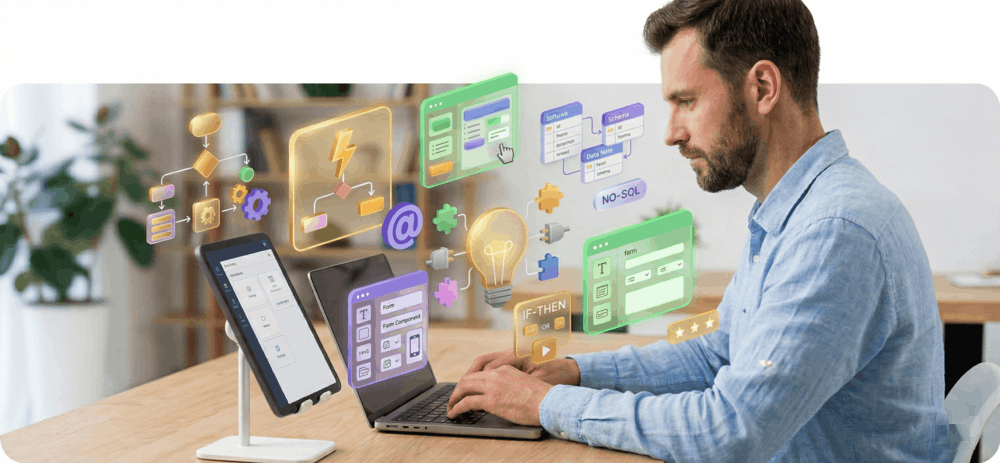
Using AI app builders like Lovable, Bolt.new, and Replit, or visual app builders like Bubble, Softr, and Glide, a vibe coder builds the digital products your business runs on. These include client-facing portals, booking systems, dashboards, and internal tools your team uses daily.
Turning Product Requirements Into Working Prototypes
A vibe coder takes your product requirements and user stories and translates them into working prototypes using natural language prompts and visual editors. Once done, your team can immediately use what’s built upon handover.
Automating Business Workflows
Vibe coders connect your existing tools and build the trigger-based processes that put an end to manual work through Make, n8n, or Power Automate. They describe the logic. The AI builds the automation. They check that it works. End-to-end.
After the integrations are built, everything takes care of itself.
Integrating Third-Party APIs, Databases, and Services
Databases like Supabase, Firebase, and xano, payment gateways, CRMs, and any third-party service your business relies on are linked to the build. The vibe coder maps the steps that determine what happens when data is transferred between them, without writing the full backend code.
Iterating on UI/UX Based on User Feedback
After the first version goes live, the no code development professional refines it. They use no-code development tools like Cursor and v0 by Vercel, adjust interfaces, and improve flows. User feedback serves as the basis for what the initial build got right or not. The vibe coder responds to what users are doing inside the product accordingly.
Since the build is in a platform that’s visual, changes are implemented quickly. No rebuilding from the ground up.
Reviewing and Validating AI-Generated Outputs
This is where the vibe coder’s expertise and judgment hold the center. Before anything goes live, the vibe coder evaluates what the AI produces for functional accuracy (if it behaves as designed), data integrity, and security risks.
“
Studies show that 40-45% of AI-generated code contains security vulnerabilities.
Code Quality & Risk Analysis
Maintaining and Documenting the Build
A vibe coder leaves your team with full visibility of what was built and how it works. They document what they build, the structure, the logic behind how things work, and how your team can maintain it themselves.
Collaborating Across Teams
Vibe coders clearly and plainly communicate the work done. They work alongside designers, engineers, and project managers to size up projects and translate what the business needs into what’s buildable on the platforms.
What Are No-Code Tools List: Vibe Coding Platforms
The platform choice usually comes before the hire. If your business is already on Airtable, look for someone who knows Airtable. The same applies across every category above.
Vibe coders work across several platform categories depending on the build.
Vibe Coding or No-Code Software Development Tools and Functions:
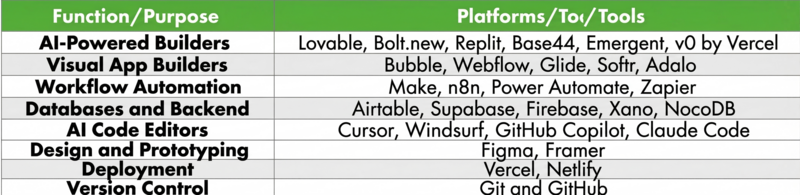
A vibe coder won’t cover every category, so hire according to the platforms your business is using.
Types of No-Code Developers (Vibe Coders By Specialisation)
The industry doesn’t follow a fixed taxonomy around the categories within this role. Vibe coders tend to specialise according to no-code development platform and use case.
These are the most common specialisations AU businesses hire for:
#1. No Code Automation Specialist
Platforms They Use: Make, n8n, Power Automate
This specialist spells out the automation logic in plain language and directs the tools to execute it. Trigger-action moments become automatic. A customer submits a form, and your CRM updates. You receive a notification for a product query, and the sender is sent a follow-up email.
For many SMEs in Australia, this is the fastest hire-to-result timeline of any no-code specialisation.
What To Do: Pick any tool your team uses daily and identify how many times a week someone manually copies data from it to another. More than five times means this hire should be on your team asap.
#2. No Code Web Application Developer
Platforms They Use: Lovable, Bolt.new, Bubble, Adalo
In no-code app development, the developer builds client portals, booking systems, and SaaS MVPs using AI-powered builders and visual development environments. They detail product requirements using natural language prompts and visual editors in order to create working prototypes, completing the work that traditionally takes weeks to months.
Data from 2025 and 2026 consistently reveal that developers complete tasks 25-55% faster with AI assistance.
In Australia, it usually takes 3 to 12 months to build a fully functional one. A no-code web developer delivers a working, maintainable version in four to 10 weeks, at a friendlier cost.
What To Do: Get a quote from a no-code web developer. The quote will be significantly different from what a software developer gives you.
Illustration: Tom has a B2B consulting firm in Melbourne, and needs a portal where clients can submit briefs. His team would be tracking project status and approving deliverables on it.
The developer’s quote was $AUD65,000, and a six-month timetable. The no-code web application developer’s quote was lower, and built a working Bubble portal in seven weeks.
While no-code development and vibe coding are technically distinct approaches, the lines have blurred significantly in 2026 as every major no-code platform has integrated AI. For practical purposes, the two terms are used interchangeably across the industry and throughout this guide.
#3. No Code Website and CMS Developer
Platforms They Use: Webflow
For building design-precise, CMS-driven websites, a no-code website and CMS developer is the one to call in. This person directs the platform’s visual tools so your marketing team can update and publish content, and make changes on their own after launch.
What To Do: Website update requests in backlogs are tasks your marketing team could’ve handled themselves without involving a developer. A vibe coder-configured Webflow site gives them that ability.
#4. No Code Data and Internal Tools Specialist
Platforms: Airtable, Supabase, Firebase, Xano, NocoDB
No-code data and internal tools experts transform fragmented spreadsheets and systems into structured databases. They build the system and set up what each team sees inside it. They make sure the information stays current through automatic updates.
This is a relevant hire for AU companies in the construction, logistics, professional services, and healthcare industries, because their operations are typically divided by function, across multiple disconnected spreadsheets.
What To Do: Stop relying on a manual spreadsheet and avoid the risk of not knowing what to do next if items on it are deleted.
Illustration: Daniel owns a freight logistics company. With a large main office in Brisbane, his dispatch team tracks jobs that are buried in three separate Google Sheets. Records are often duplicated, making real-time updating a problem. Jobs fall through during shift changes.
A vibe coder prompts an Airtable build that consolidates all three sheets. They describe the job assignment logic in plain language and test that it works. It should be able to auto-assign jobs based on driver availability and send SMS notifications at status changes.
No more lost jobs.
#5. AI-First Developer
Platforms: Cursor, Windsurf, GitHub Copilot, Claude Code
An AI-first developer’s primary concern is the quality of what the AI produces. It’s the most technically specific specialisation within the vibe coder role, as they’re focused on output validation and security review.
They update the interface as users engage with the platform.
What To Do: If your business is building on Lovable, Bolt.new, or Replit, this expert does the final check before the build’s rolled out for real users.
Did You Know?
The term “vibe coder” was coined by AI researcher Andrej Karpathy in February 2025 and named Collins Dictionary’s Word of the Year for 2025.
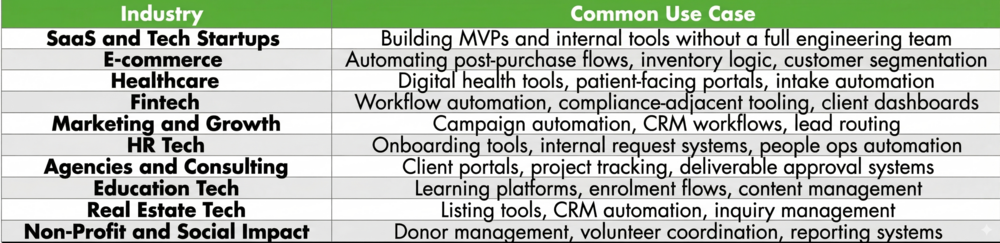
Where Do Vibe Coders Work? Industries That Hire This Role
The demand for vibe coders is spreading across industries, business sizes, and use cases in Australia. Here’s where the hire is growing.
Vibe Coders Across Industries:
When You Might Not Need a Vibe Coder
There are two situations where a different approach, or a different hire, makes sense:
You’re Building For Very Large Scale
The key benefits of no-code development are accessibility and speed. If your platform is faced with thousands of users simultaneously at any given time, traditional development is the better option. And the specialist to do it is a software developer.
You Want Full Independence From Any Single Platform
What gets built in a no-code platform stays inside it. Businesses where technology has a stake in business valuation (e.g. businesses prepped for merging) will match up more ideally with a software developer, so your business owns the code.
No Code Developer Skills & Qualifications (What Skills Do You Need For No-Code Developers When Hiring)
Let’s take a look at what separates a capable vibe coder from someone who merely knows how to give prompts to AI like ChatGPT or Gemini:
Experience
At least 1-4 years building products with no-code or low-code platforms, with a demonstrated portfolio of shipped apps or tools.
Technical Skills
- Proficiency in at least two AI app-building platforms, evidenced through live builds
- Data modelling – how they structure information, tables, relationships, and queries across records
- REST API and JSON familiarity – understanding how your tools pass data to each other
- Basic HTML, CSS, and JavaScript – enough to review and lightly edit AI-generated code
- An eye for what users see and interact with, particularly in Bubble, Webflow, and AI-generated interfaces from Lovable or Bolt.new
- Version control basics – familiarity with Git and platform-native version history tools
AI and Automation Skills
- AI prompt fluency – crafting clear, specific, iterative prompts that guide AI tools toward production-quality outputs
- Automation fluency – experience designing multi-step workflows with conditional logic and error handling
- Product thinking – the ability to figure out what should be built first and what can wait, and when buying is the better option than building
Soft Skills
Beyond the technical side, a capable vibe coder communicates clearly across teams and manages stakeholder expectations. They work even without a perfect brief to get started. They keep up with fast-moving platforms and can adapt to changes along the way.
AU Compliance Awareness
Any vibe coder managing automations that handle customer data or send commercial messages needs working knowledge of the Spam Act 2003 and The Privacy Act 1988.
What To Do: Ask every candidate to show you a live build. The ones worth putting through the hiring process can explain exactly why they built it the way they did.
No-Code Developer Salary: How Much Does a No-Code Developer Earn in Australia?
You’re asking, “How much should I pay for a no code developer?” Available salary data below are from online job platform averages, and here’s what the numbers say as of 2025 to 2026:
Vibe Coder Salary Range:
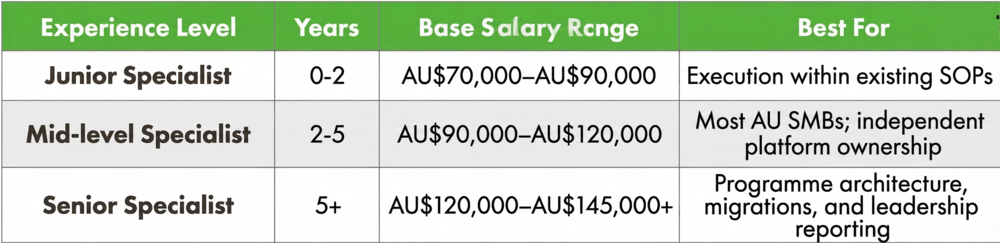
When you consider the Loaded Cost, you’re adding payroll tax obligations in higher-threshold states, workers’ compensation, and leave entitlement to the base salaries in the table above. This 25 to 35% on top of the premium includes the 12% Superannuation (stay up-to-date with Payday Super 2026 Rules and beyond).
Local Vs Remote Hiring
The salary range of this role is strapped to a heavy price tag. This is why AU businesses are choosing to hire remotely. Understandably, businesses are setting their sights on the practical with regard to overall spend. Let alone a new hire.
Hiring remotely lightens that load, while bringing you talent that’s no different from what you’d come across locally.
Calculate the cost using your own numbers with our Outsourcing Calculator Tool (click, scroll, and type your actual numbers):
How Remote Staff Helps AU Businesses Find the Right No-Code Developer
Many are learning that in Australia, the demand for no-code developers is increasing. However, the local talent pool hasn’t kept pace.
As a business owner, you shouldn’t carry the weight of the hiring process. Our team has been pairing Australian businesses with technical professionals across industries and business sizes for 18 years.
With Remote Staff, every no code developer in your candidate list has gone through a vetting process. They’ve done the work, with project histories supporting their applications.
Geography is what makes the cost workable. And despite the difference in location, there’s a cultural adaptability that allows for naturally cohesive working relationships between our specialists and business owners.
The paperwork, onboarding, and HR side of the hire? We’ve got them covered. Hiring full-time, part-time, or per-project is completely up to you.
Learn How to Calculate Outsourcing Cost in Australia and stay compliant in all parts of your business through the Modern Slavery Act Australia.
FAQs
Is no-code development a real profession, or is it a workaround for businesses that can’t afford a developer?
It’s a real, skilled profession, and vibe coding is its most current form or name. It works in a different sphere than traditional development, involving AI-powered building and visual platforms like Lovable, Bolt.new, Bubble, and Webflow to set up the systems and automations where traditional programming isn’t required.
What is the no-code developer definition, and what’s the difference between a no-code developer and a team member who “knows Make”?
A team member who uses Make has learned a tool for specific tasks. A vibe coder crafts AI prompts that produce production-quality outputs and builds the rules that allow features to run automatically.
Can a no-code developer replace a traditional software developer for my AU business? (Will no-code replace developers?)
For most AU SMEs, a no-code developer covers the majority of digital build requirements at a lower cost and faster timelines. Highly complex systems are still meant for large-scale operations and require traditional development.
How long does it take to see results after hiring a no code developer?
With AI-powered builders, prototypes can be live within days, whereas production-ready builds with proper data architecture and security review take four to ten weeks, or more.
No Code Doesn’t Mean No Developer
Most AU SMEs aren’t suffering from a lack of AI-powered development software. They have the platforms. What they’re missing is the person who knows how to direct the AI within.
Every platform you’ve purchased has been waiting for this person. So have you and your team.
We’re here to help you find the right vibe coder, so that searching for your hire doesn’t become another project in your timeline.
Call us today or Request a Callback, and let the AI in your tools meet the person who knows how to direct it.

Vaune Everis Cura has always been a writer in the truest sense, drawn to the art both as a personal creative pursuit and as a profession. Her experience penning content across digital marketing spaces and collaborating with business owners and market shapers has broadened her craft to include strategic direction and SEO insight. Having spent years with the InterContinental Hotels Group before stepping boldly into freelancing, she understands that at the centre of it all are genuine, meaningful brand–customer relationships built on purposeful, human content.